Action Plan (PDF)
We are happy to share the Action Plan for Our Mountain's Future. The Action Plan outlines the pathway for delivering the community's Vision for the future of Wellington Park.
This PDF version is the complete Action Plan.

We are happy to share the Action Plan for Our Mountain's Future. The Action Plan outlines the pathway for delivering the community's Vision for the future of Wellington Park.
This PDF version is the complete Action Plan.
This Easy Read Action Plan is easier to read and understand. It uses simple words, pictures and short sentences.
You can read the full Action Plan if you would like more detail.
This is a plain text version of the Action Plan. It has been designed to be accessible for screen readers and assistive devices.
This is a shortened version of the Action Plan for Our Mountain’s Future. The PDF version contains the full report which includes additional content.
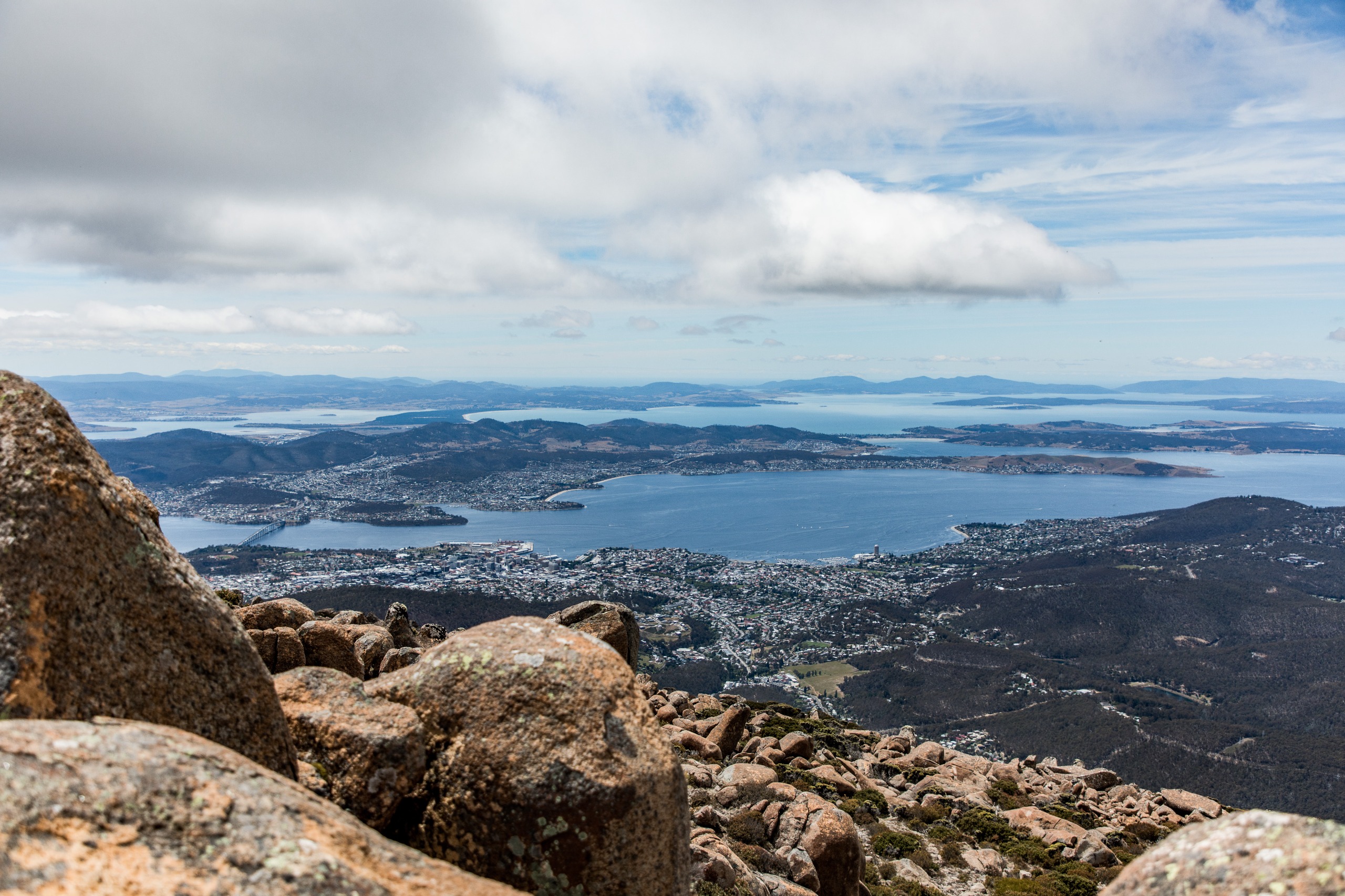
Image credit: Natasha Mulhall
Kunanyi/Mount Wellington and the Wellington Park hold a special place in the hearts of Tasmanians and visitors alike.
Right on Hobart’s doorstep, the Park contains stunning natural landscapes, significant cultural values and is a key contributor to our visitor economy.
The Tasmanian Government is committed to securing the future of Wellington Park as a safe, enjoyable, and breathtaking natural destination for generations to come. The Our Mountain's Future strategic review delivers on our promise - developing a future Vision for the Park and key actions to make it a reality.
We know that the Tasmanian community have a deep connection with the mountain. More than 9,000 Tasmanians shared their views on what matters most for the future of the Park as part of the consultation phase of the review. The Vision that we developed reflects what people value and sets out how we aspire to enjoy and care for the Park over the long-term.
Now, we are turning our minds to what needs to change to bring that Vision to life. The Action Plan is our roadmap for action, heralding a new era for our Park. It carefully balances conservation with opportunity, reflecting the aspirations of the Tasmanian community.
The Action Plan has been developed in collaboration with key stakeholders, management bodies, and councils to turn the aspirations in the Vision into practical steps.
The Action Plan proposes ambitious reforms to the way that we manage the Park. For the first time, we will bring together the complex patchwork of land ownership under a single landowner. We will establish a new Managing Authority to own and manage the whole of the Park, promoting effective and efficient Park management. A new Management Plan and Master Plan will be drafted to ensure that the Park has the necessary infrastructure and amenities to meet growing demand, while maintaining environmental integrity.
Fire management will also be an immediate priority. The Government will advance a coordinated Park wide approach to fire risk mitigation to strengthen preparedness to protect communities, visitors, infrastructure, and the Park's natural and cultural values.
The Managing Authority will also work to implement a self-sustaining resourcing model, ensuring long-term security of funding for the Park. We will continue to support businesses in the Park by introducing scalable fees for commercial operators and simplified licensing and permitting processes.
Implementing the Action Plan will ensure visitors can enjoy safe, high quality experiences without compromising what makes the Park special.
On behalf of the Tasmanian Government, I thank every individual and organisation who contributed to this review. Your insights have shaped an Action Plan that will protect, enhance, and celebrate this extraordinary place for the future.

Minister for Business, Industry and Resources
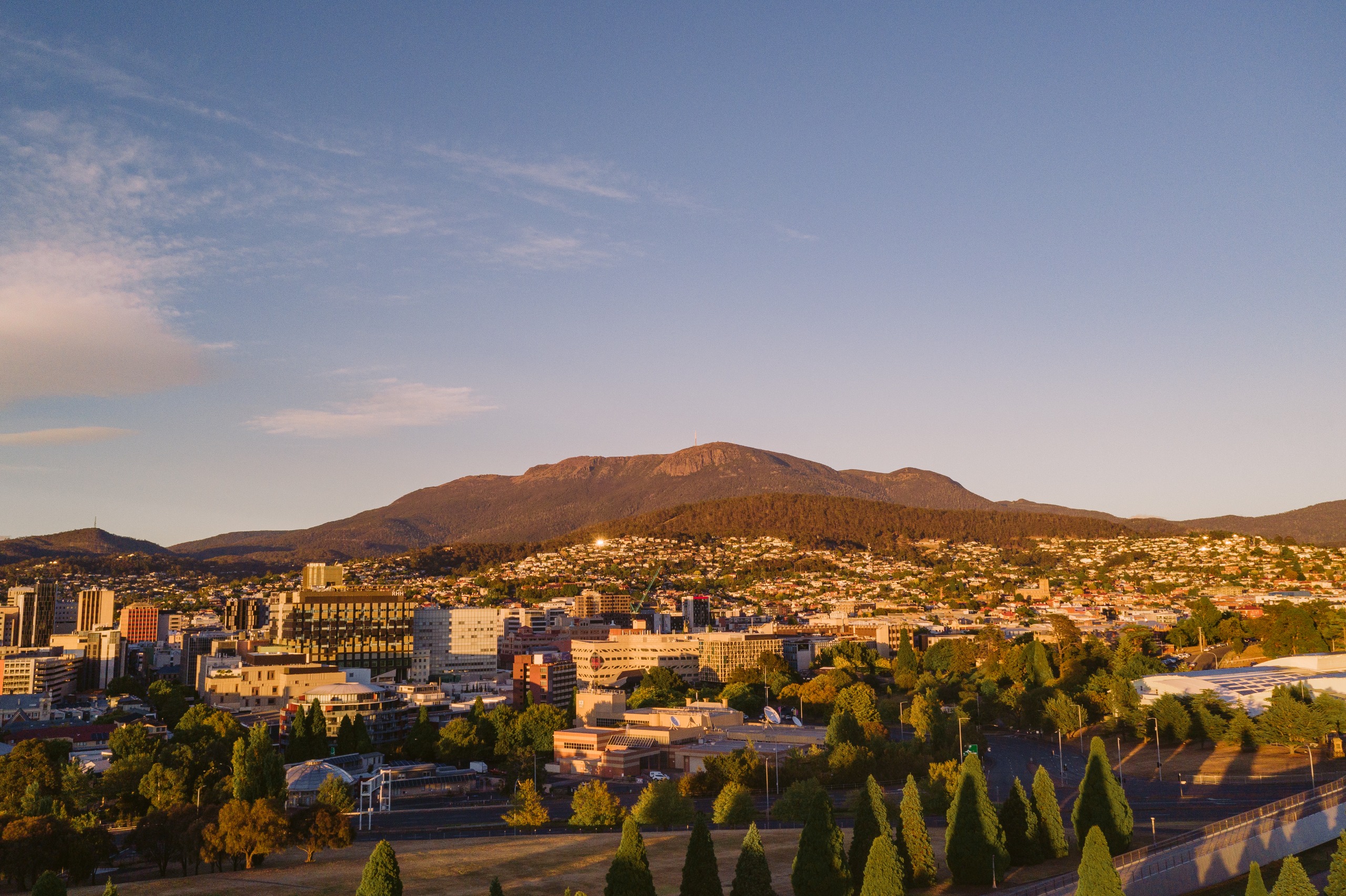
Credit to Fred and Hannah
Wellington Park is deeply valued by the Tasmanian community for its landscapes of natural beauty, cultural significance and everyday recreation. Kunanyi / Mount Wellington is the second most visited attraction in the state but growing visitation, changing climate conditions, and infrastructure demands place increasing pressure on the Park, highlighting the need for a coordinated, long-term approach to management.
The Tasmanian Government recognises these challenges and has undertaken the Our Mountain’s Future strategic review (the review) to assess how we can ensure that the Park is best prepared for the future. The review was undertaken in three phases:
A public consultation period held from 23 October to 4 December 2024. A short discussion paper was prepared introducing the three themes for the review.
The second phase of the review focused on interpreting the findings from the community engagement to develop the Vision for the future of the Park, which was released in June 2025 alongside a Consultation Summary. The Vision includes aspirational statements about the Park’s values and explores how people wish to experience and enjoy it into the future.
This phase included in-depth research and consultation into complex issues such as land tenure, land use planning, resourcing, commercial use and maintenance. Consideration of the most appropriate governance model for the Park underpins many of the actions within this Action Plan. The actions were informed by ideas gathered during the community consultation phase, which highlighted a range of challenges and opportunities to make improvements across the Park.
This Action Plan represents the first step in delivering the Vision for Our Mountain’s Future.
The Tasmanian Government now has a clear understanding of the Park’s needs and community expectations. The focus shifts from planning to delivering the reforms and actions in this Action Plan. These changes are designed to improve the Park into the long-term and implementation will be guided by ongoing collaboration with Tasmanian Aboriginal people, local government, stakeholders, and the broader Tasmanian community.
The first priority is for the Tasmanian Government to implement the governance reforms described in this Action Plan. This includes consolidating land tenure and establishing the new Managing Authority and board with skills-based appointments to manage the Park. These are significant reforms that will require detailed policy design and amendments to the Wellington Park Act 1993 (WPA) and will be fundamental for delivering the recommendations described in this Action Plan.
Wellington Park Management Trust's (the Trust) extensive contributions over the past 35 years are acknowledged and valued. Until legislative amendments to the WPA are finalised, the Trust will continue to perform its existing roles and functions, and the landowners will continue to be responsible for operational work.
Once the legislative review is complete, and the new Managing Authority is established, it is recommended that it use this Action Plan to guide improvements for the future of the Park.
One of the Managing Authority’s first tasks will be to prepare a new Management Plan to guide use and development within the Park. In 2022, the Trust commenced a full statutory review of the Wellington Park Management Plan (2013), which was paused to avoid potential conflicts with the review. The Managing Authority will build on the Trust’s previous efforts, including its consultation with the Palawa community on the Park’s Aboriginal values.
While some actions may require further consultation, visitors can expect progressive improvements to facilities and amenities over the coming years, particularly as the new resourcing model matures.
This work will be complemented by the Trust’s recently completed business case on user-pays models and an infrastructure Master Plan for the Park, as well as the City of Hobart's (CoH) work to produce a development ready plan for a Mountain Gateway at Halls Saddle.
During the third phase of the review, we consulted with key stakeholders to help shape our thinking about the future management of Wellington Park, including:
We also examined how other comparable parks and reserves are managed to help develop a model that best fits the Park’s needs.
The Park needs coordinated and effective management to ensure its long-term protection and sustainable use. The Park was reserved under its own legislation because of its unique context, and the need to designate specific purposes for reservation including for recreational and tourism uses and opportunities, protection of natural and cultural values and the protection of the water catchments.
More than 30 years after the Park was established, visitation has grown, infrastructure has aged, and current arrangements are no longer meeting its needs. Future management of the Park needs to reflect its unique context including its purposes of reservation, proximity to an urban environment, high visitation levels, strategic tourism value, and diverse landscape spanning both sensitive alpine areas and high use recreational zones. With this in mind, developing a fit-for-purpose management model is fundamental to ensuring that the actions of this review can be effectively implemented.
The Trust is the statutory managing authority responsible for planning and oversight across the Park. Its membership comprises representatives from the Park’s landowners and other relevant agencies:
Under the WPA the Trust’s functions include:
Most National Parks and reserves in Tasmania are Crown land proclaimed under the Nature Conservation Act 2002 (NCA) and managed by the PWS. However, in Wellington Park, management is more complex because the Park is comprised of 14 separate parcels of land owned by the City of Hobart (CoH), Glenorchy City Council (GCC) and the Crown (managed by PWS). This is one of the reasons why the Park was proclaimed under its own bespoke legislation – the Wellington Park Act 1993.
Across the Park, these landowners, the Trust, and asset managers such as TasWater, each perform different management roles and responsibilities. Each landowner funds and undertakes on-ground management of its land. The Park’s landowners continue to have rights over their land, including determining whether a development application can be lodged with the local council.
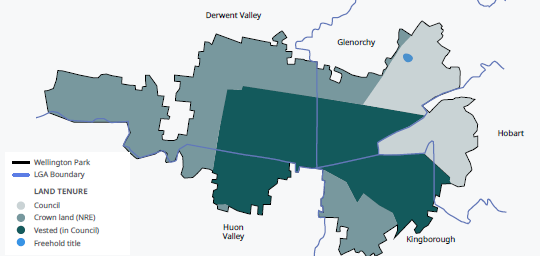
Map of land ownership in Wellington Park
The Park is governed by a suite of statutes, policies, plans, strategies and guidelines, primarily:
Even with the Wellington Park Management Plan (2013) and oversight from the Trust, the mixed ownership arrangement makes it difficult to manage the Park as a whole.
Wellington Park needs well-planned infrastructure to protect the environment, support public safety, and deliver quality visitor experiences. Development must be carefully managed in accordance with a statutory framework to protect natural and cultural values while promoting recreational and tourism opportunities.
The Management Plan
The Management Plan ensures that proposed development and use is sensitive, appropriately located, and consistent with the Park’s diverse values. It defines where activities, use and development can occur in the Park, and sets out assessment processes for development. The Park is divided into a series of zones and specific areas, each of which have defined standards and allowable uses. The Springs and the Pinnacle are identified as popular areas that have the potential for increased visitor services and facilities. For this reason, Specific Area Plans were created to guide development and use for these areas.
For each zone, the Management Plan lists a range of uses and developments that are Permitted or Discretionary, meaning that a permit is required from the relevant planning authority. Examples include tourist operations, food services, toilet facilities, or viewing shelters at the Pinnacle or The Springs. Some uses do not require a permit, while other uses and development are prohibited entirely in certain zones to protect Park values.
The current Management Plan
The current Management Plan has been in place since 2013. The Trust has commenced work on its revision, but this work was paused to allow the review to progress and to ensure alignment with the review's outcomes.
The Tasmanian Planning Scheme
The Park spans five local council areas: Hobart, Glenorchy, Kingborough, Huon Valley, and Derwent Valley. Under the Land Use Planning and Approvals Act 1993 (LUPAA), local councils (planning authorities) assess development applications against their own planning scheme. Across the Park, the Management Plan functions as the planning scheme. Planning authorities assess development applications in the Park as if the Management Plan was a part of their own planning scheme. The Management Plan also overrides a planning authority’s own planning scheme if there is an inconsistency. This approach provides a consistent, Park-wide planning framework.
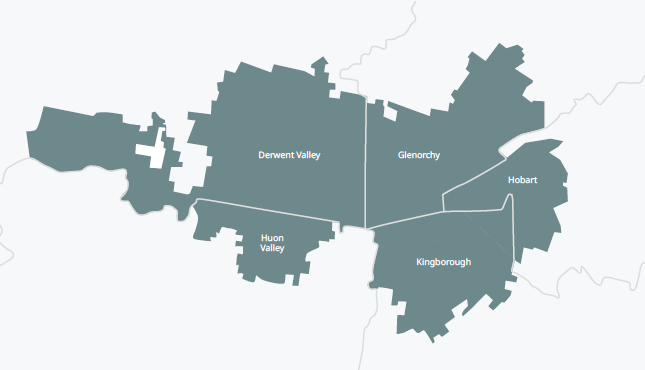
Map of municipal boundaries in Wellington Park
Management Plans are commonly prepared for National Parks and other reserves to guide their use, development and management. Wellington Park is unique because its Management Plan also functions as the planning scheme for development assessment.
In National Parks and other reserves, the Management Plan is usually assessed by the managing authority (PWS), and certain developments must also be assessed by the local council under its own planning scheme.
Who makes the decisions?
Typically, development proposals on reserved land in Tasmania require authorisation under the National Parks and Reserves Management Act 2002 (NPRMA) and may also need planning approval from a planning authority. However, in Wellington Park, approvals are more complex.
Depending on the type of land use or development proposal, approval may involve:
Without a clear, streamlined approach to approvals, agencies risk wasting limited resources and time undertaking internal assessment of proposals, duplicating the work already completed by other agencies.
A new fit-for-purpose management model is fundamental to delivering the long-term Vision for the Park because the current system distributes accountability and responsibility across multiple bodies, making strategic responses difficult and sometimes duplicative. A new governance model is needed to coordinate planning, investment and operations, and to protect what makes the Park special.
Unclear roles, responsibilities, and accountabilities
The Park’s mixed ownership and resourcing arrangements make management roles and responsibilities unclear because multiple agencies make decisions and carry out work across different parts of the Park. There are often difficulties identifying who carries responsibility and ensuring that resources are directed where they are needed most.
This is especially problematic for Park-wide activities such as fire management and conservation efforts where land managers operate with differing priorities and resourcing. Uncertainty exists around maintenance of assets such as tracks, servicing water catchment infrastructure, or activities crossing land boundaries leading to gaps and unnecessary risk. Without a single authority with absolute responsibility for monitoring and acting on threats, risks can go unaddressed and may lead to irreversible or devastating consequences.
Mixed land tenure also contributes to misunderstanding among the public and stakeholders about the role and authority of the Trust. While the Trust has been valuable in upholding Park values, and strategic planning, its lack of land ownership limits its ability to ensure consistent action.
Little holistic planning for Park-wide issues
While the Trust and the Management Plan bring a level of coordination and strategic planning, day-to-day operations and maintenance occur through different agencies, each with their own priorities, timeframes and budgets. For example, each agency has undertaken its own planning for the future of the Park. However, these plans are not holistic and relate to their respective areas of the Park.
Complex approvals and regulations
The current permitting process is complicated because permission may be required from both the landowner and the Trust as managing authority. This leads to duplication, delays and unnecessary administrative burden.
Landowners must follow their own operational procedures while also meeting the additional requirements of the WPA and Regulations, requiring permission from the Trust even for routine maintenance on their own land. The result is inefficiency and overlapping responsibilities for all agencies involved.
Outdated governance of the Trust
The WPA is more than 30 years old, and the Trust’s structure reflects outdated governance practice. Its prescriptive membership does not allow for skills-based appointments, and the lack of term limits reduces renewal and diversity of expertise.
The Trust’s legal status and its name have caused ongoing confusion. The Trust is established as a body corporate, but its name makes it sound like a legal trust. This has led to uncertainty about its independence and whether it should be considered a government organisation. This ambiguity complicates administrative processes and funding matters, such as applications for grants.
Despite the best efforts of the Trust and the current landowners, the Park is not currently managed to the high standards expected by the local community and visitors. Major changes are needed to better protect the Park’s values, while enabling appropriate recreation and tourism opportunities. A new, fit-for-purpose management model is proposed, informed by stakeholder and community feedback, and case study analysis.
The Tasmanian Government will establish a new Managing Authority to manage all aspects of the Park holistically. While the previous efforts and hard work of the Trust are acknowledged, a new Managing Authority is needed to take on both strategic and operational responsibility for the whole Park.
Consolidating land ownership
Consolidating all land in the Park under the Managing Authority’s ownership will be one of the first steps for the Tasmanian Government. Consolidation under a single owner and manager will bring benefits including:
Priorities can be set by a single entity, so that future improvements can be made in a way that is well-planned and can consider the longer-term future of the Park. The Managing Authority will be empowered to allocate resources and funding according to those priorities, rather than relying on several agencies to progress works under their own programs.
A note on the National Park model
Through consultation, many people suggested that the Park should be reserved as a National Park, or State Reserve. Based on advice from the Department of Natural Resources and Environment Tasmania, parts of the Park are capable of meeting the criteria for either National Park or State Reserve listing under the Nature Conservation Act 2002.
However, the Park's diverse values and mixed uses make it difficult to fit the whole Park within an existing reserve category. Assigning multiple tenures under the Nature Conservation Act 2002 would create a more complex management arrangement. A special reserve classification allows for greater flexibility and supports a wider range of recreational activities. It also allows a single Management Plan to apply across the entire Park. For these reasons, the Park should remain a special reserve managed under its own dedicated legislation.
The composition of the Managing Authority
The new Managing Authority will be led by a Chair appointed by the Minister responsible for the WPA, as is the case currently. Membership of the Managing
Authority will comprise:
It will be important to ensure the Managing Authority has the appropriate skills and expertise: those skills could include financial, natural values management, Aboriginal, fire risk management, and tourism and visitor engagement and management.
A hybrid board model, combining skills‑based and organisational representation, is considered most appropriate because while land will be owned and managed by the Managing Authority, participating organisations will continue to play an important role in supporting the Park during its establishment and transition to long‑term sustainability. Representation from the CoH and GCC will be maintained given their direct role in managing the urban interfaces to the Park, including surrounding communities, access roads, and visitor gateways, together with their continued involvement in supporting the stewardship of the Park during the transition period. TasWater should continue to be represented due to the significant water catchments contained within the Park and the need to provide subject matter expertise on their protection, in accordance with the Park’s purposes for reservation.
Retaining representative involvement alongside independent expertise supports continuity, coordinated access and visitor management, and cost‑effective governance, while ensuring the Managing Authority benefits from both specialised skills and practical institutional knowledge. There may be scope to move to a fully skills-based board once the Managing Authority becomes self-sustaining noting that this would attract an increased cost for the Managing Authority's operation.
Limiting representation of existing landowners to one member representative will ensure that the board remains an effective size. Appointments will be subject to term limits (except ex-officio members), supporting diversity and renewal and reflecting modern best practice governance.
The new governing body will be named a Managing Authority, to overcome some of the challenges identified above associated with the name ‘Trust’.
The role of the new Managing Authority
The new Managing Authority will be solely responsible for strategic direction and administration, providing a coordinated, Park-wide approach. The Managing Authority will:
Case study: Great Ocean Road Coast and Parks Authority
The Great Ocean Road Coast and Parks Authority demonstrates how unifying land management under one authority delivers streamlined, coordinated management with clear accountability. The Authority now manages land formerly overseen by 11 different land managers under the Great Ocean Road and Environs Protection Act 2020 (Vic), resulting in clearer responsibilities and more efficient, consistent decision-making across the region.
Land use and development
Building on the work completed by the Trust, one of the first tasks for the Managing Authority will be to prepare a new Management Plan. The Management Plan will continue to function as an integrated, Park-wide planning framework and local councils (planning authorities) will continue to assess proposals against the Management Plan to ensure robust planning and development control. However, the need to obtain consent from several agencies will be reduced, streamlining approvals and reducing duplication. Further explanation of the permitting process is provided
Case study: Port Arthur Historic Site Management Authority (PAHSMA)
The PAHSMA case shows that empowered statutory managing authorities can streamline approval processes and improve coordination of on-ground management. PAHSMA has statutory control over the Port Arthur Historic Sites under its establishing legislation and manages the sites in accordance with the management plan made under the National Parks and Reserves Management Act 2002. It is empowered to approve a range of works and activities on behalf of the Minister. When empowered to make decisions, statutory managers can streamline approval processes and improve management efficiency.
The Tasmanian Government will conduct a legislative review to implement the new management model and to consolidate the land tenure. This work will ensure that the new Managing Authority has the clarity, authority and tools needed to manage the Park effectively. The legislative review should consider the most appropriate entity type to ensure operational efficiency and access to funding.
Once established, the Managing Authority will be responsible for delivering the remaining actions put forward in the following chapters of this Action Plan. This includes developing a contemporary Management Plan that reflects the Vision and balances the values appropriately. It will need to negotiate future funding arrangements, implement the resourcing model described in this Action Plan and begin progressing priority initiatives.
These next steps will enable the Park to be managed as a single, coherent landscape, and create the conditions for consistent decision-making, better planning and long-term alignment with the Vision for Wellington Park. Together, these changes mark the beginning of a transition to a modern, coordinated governance model for Wellington Park.
Together, these changes mark the beginning of a transition to a modern, coordinated governance model for Wellington Park.
The Tasmanian Government will conduct a legislative review to establish a new Managing Authority as the sole owner of Wellington Park and ensure the Wellington Park Act 1993 contains appropriate provisions to function effectively.
Time: Short Cost: LowThe Managing Authority will, as a priority, develop a new Management Plan that is fit-for-purpose and reflects the Vision.
Time: Short Cost: MediumThis chapter draws on consultation with the CoH, GCC, PWS and the Trust. It also uses analysis of the Park’s historical financial situation, and a range of potential resourcing models have been explored. It has also considered work undertaken by the Trust to develop a business case to test user-pays as one option for raising revenue.
Wellington Park Management Trust User-pays Business Case
The Trust received funding from the Tasmanian Government to develop a business case assessing a user-pays revenue model for the Park, drawing on demand forecasting and economic modelling informed by the Cradle Mountain system.
Maintaining the Park requires ongoing investment to protect the qualities that make it unique and ensure it remains safe and accessible. At present, the Park is predominantly funded by Hobart and Glenorchy ratepayers, TasWater and the Tasmanian Government, while visitors from other municipalities, interstate and overseas contribute only modestly through indirect mechanisms such as commercial permits.
Current funding does not enable the Trust to fulfil its functions or support the level of strategic management required under the WPA. Without predictable and adequate funding:
A fair, transparent and reliable long‑term model is needed to reduce reliance on one‑off allocations and support sustained investment in conservation, infrastructure and visitor experience.
Resourcing the Trust
The Trust relies largely on Tasmanian Government allocations and member contributions, with a small income generated from permits, licences and fines under the Wellington Park Regulations 2019. Unlike National Parks, access to the Park is free for visitors.
The Tasmanian Government provides a recurrent funding allocation to the Trust through NRE and occasional one-off allocations of project-specific funding and grants. For example, in the 2024-25 state budget, the Trust was allocated $100,000 for the review of the Wellington Park Management Plan (2013). A separate one-off grant of $300,000 was provided across two instalments in 2024-25 and 2025-26 to develop its business case. This does not relate directly to Park administration and so is excluded from the funding contributions to the Trust below.
The Trust also receives funding and in-kind support from the CoH, GCC, PWS and TasWater to complete strategic and Park-wide management activities. For example, in addition to funding, the CoH also provides the Trust with office accommodation and IT support at no cost and PWS provides in-kind support such as through the inclusion of Trust staff in fire training.
| Table 1. Snapshot of funding contributions to the Trust | |||||
|---|---|---|---|---|---|
| Financial year | City of Hobart ($) | Glenorchy City Council ($) | TasWater ($) | State Government ($) | Total ($) |
| 2024-25 | 39,992 | 40,749 | 75,802 | 487,000 | 643,543 |
| 2023-24 | 38,790 | 39,524 | 73,522 | 394,000 | 545,836 |
| 2022-23 | 36,953 | 37,642 | 70,021 | 391,000 | 535,616 |
| Average | 38,578 | 39,305 | 73,115 | 424,000 | 574,998 |
Resourcing contributions of land managers
In addition to contributions to the Trust, landowners fund and deliver operational work on their land.
The CoH manages $84.3 million in assets within the Park, including for example Pinnacle Road, fire trails, and walking tracks. The GCC holds approximately $17.2 million in assets, most of which are fire trails. Although the majority of Crown land is backcountry with limited infrastructure and visitation, there are fire trails and walking tracks of various standards, and PWS has previously allocated project specific funding to the Park.
The CoH invests significantly more than other members as the owners of the most asset-dense portion of the Park. Total capital expenditure for the Park is estimated to be $3.2 million and includes investment in new assets or significant improvements to existing assets like road and trail works and bushland projects. Total operational expenditure for the Park is estimated to be $2.7 million and covers the day-to-day costs required to manage and maintain the Park including staffing, fire management, road and stormwater maintenance, and building upkeep.
Overall funding
Table 2 provides a snapshot using 2024-25 data showing that the current model is not financially sustainable, and highlights the need for the Managing Authority to implement a self-sustaining resourcing model. It does not capture how revenue and costs may evolve over time. Longer-term considerations including visitation trends, inflation, and evolving operational needs will also influence future revenue requirements. In addition,the funding reported here reflects the existing standard of operation, meaning that any uplift would require further investment.
| Table 2. Resourcing model financial implications – Snapshot using 2024-25 data | |||
|---|---|---|---|
| Financial component | Amount ($) per annum | ||
| Revenue | Member contributions | Existing member contributions to the Trust | 544,000 |
| Revenue | Existing capital and operational expenses | 5,920,000 | |
| Costs | Managing Authority operating costs | Existing operations | 603,000 |
| Additional costs of operating a Managing Authority | 200,000 | ||
| Management costs | Capital and operational expenditure | 5,920,000 | |
| Total | Deficit | 259,000 | |
Funding pressures
While the Trust can and has undertaken planning and developed a range of strategies, it does not have the resources or authority to implement them. Existing revenue is fully consumed by basic operations, and the Trust’s reliance on landowner contributions and lack of long-term certainty over funding further complicates its ability to implement change.
Landowners must continue to fund strategic operations and maintenance from their own constrained budgets, in addition to making contributions to the Trust. This leads to a disconnect between the strategic priorities of the Trust, as the managing authority, and the individual priorities and funding of each landowner.
Resourcing responsibilities
Operational responsibilities are spread across several landowners and agencies, each with different priorities, service standards, visitor pressures, infrastructure needs and funding capacities. This creates uncertainty about who should fund certain activities, particularly those that cross tenures.
Differing resource needs
The Park’s most heavily visited and infrastructure intensive areas sit on CoH land and require significantly more maintenance and investment than other parts of the Park. Facilities at the Pinnacle primarily serve tourists, while lower mountain tracks are used more by residents. Although these areas are costly to maintain, the CoH receives indirect benefits from the Park’s proximity, noting that it enhances Hobart’s appeal for residents, tourists, and local businesses. Backcountry areas, by contrast, have lower visitation and fewer facilities, resulting in reduced maintenance and servicing needs.
Ongoing funding security
Landowners must continue to balance their contributions with the funding needs of their own jurisdictions. The perceived imbalances in the spread of funding responsibilities have raised concerns that landowners may not be able to maintain contributions at levels necessary to meet the Park’s needs.
To address these challenges, the Managing Authority will need a new resourcing model with a reliable funding stream to:
To achieve long-term sustainability, the Managing Authority must consider new sources of revenue. The primary aim of the new resourcing model will be to increase and stabilise funding to adequately maintain and manage the Park, and over time, offset contributions required from the current landowners.
This chapter provides an overview of possible revenue streams that the Managing Authority could consider in its design of a sustainable resourcing model.
As the single managing entity, the Managing Authority will need to fund all operational and strategic functions previously distributed across the Trust and multiple landowners. Key additional operating costs for the Managing Authority include:
This consolidation will slightly increase overall operating costs, amounting to approximately $200,000 when compared with the existing Trust.
Once the Managing Authority is established, ownership of land and assets within the Park will transfer to it. This, along with the implementation of a sustainable revenue resource model, will eventually lead to a reduction in costs and liabilities for existing contributors. However, the resourcing model will take time to design, become fully established and financially mature, meaning it will not immediately generate enough revenue to fully sustain Park operations. During this transition, existing contributors will need to provide interim financial support sufficient to cover current contributions and existing operational and capital expenditure. The detail of this support will be managed through funding agreements.
Adopting a medium-term funding agreement period of three to five years would provide the Managing Authority with the flexibility and certainty needed for effective strategic and financial planning over time. It will also allow the Managing Authority to make decisions without having to seek ongoing agreement from partners, supporting consistent and long-term land management. A legislative requirement for negotiated funding agreements may be introduced to support this approach.
A key challenge will be determining both the overall funding required over the term of the agreement as well as the proportion of funding needed from each party, proposed to initially reflect existing contributions. For this reason, the legislation may also need to include an appropriate dispute resolution mechanism.
As shareholding members of the Managing Authority, contributors would retain a role in determining how resources are used over the term of their respective funding agreements, through setting works programs, developing the Management Plan, and preparing a Master Plan.
Over time, once the new resourcing model is fully established and delivering sustainable income, funding contributions may be reduced as part of future funding agreements.
Once established, the Managing Authority should be empowered to implement a mix of revenue options. Some options for consideration are detailed here, but it will ultimately be up to the Managing Authority to develop an appropriate model.
Scalable licensing
Commercial activities are a significant and growing part of how visitors experience the Park, including guided tours, shuttle services, photography tours, mountain bike operators, climbing guides and nature based businesses, and serve mainly interstate and international visitors. Growing tourist numbers are increasing pressure on tracks, roads, toilets, viewing platforms and emergency management capacity, yet under the current system, very little of the cost burden is recovered from those visitors despite their significant impact.
At present, the Trust charges a small $191 application fee and $300 annual fees for a five‑year Commercial Operator’s Licence. However, most operators (118 out of 122), opt to license through PWS as this provides the option to operate in other parks and reserves managed by the PWS. This means that the Trust receives very little commercial licensing income, despite managing commercial activity.
Case study: Parks Victoria, Australia
Parks Victoria uses a scalable commercial operator licensing system that combines a fixed annual licence fee with a variable user fee based on the number of clients an operator brings into parks. In 2025-26, operators are required to pay a scalable per-user fee of $2.40 for adults and $1.60 for children or students, in addition to an annual fee of $349.30. To prevent excessive charges, there is an annual cap of $17,125.
The Managing Authority could consider introducing a single licensing pathway, combined with a scalable fee structure, to help address the financial gap left by the current licensing structure. Used widely in other Australian parks, scalable licencing fees could include a base component plus a variable element linked to visitor numbers or activity intensity. This would ensure larger, high volume businesses contribute more appropriately to the pressure they place on Park assets, while still providing a fair framework for smaller operators.
User-pays revenue model
The Trust’s business case focused on understanding the potential revenue that could be raised through a user-pays model such as a system based on the Cradle Mountain model, with mixed private vehicle and shuttle bus services. Early modelling undertaken for the Trust suggests such a system could raise around $6 million annually, though the detailed assumptions underpinning this remain within the Trust’s business case.
Similar to a National Parks Pass, the Managing Authority could consider a user-pays model as one potential funding mechanism. The purpose of such a model is to reduce the financial burden on the public, operators, and landowners, while ensuring that people who benefit directly from the Park contribute to its upkeep. Implementation of a user-pays model would attract additional upfront costs to establish supporting infrastructure such as the vehicle payment system and associated administrative arrangements, including staffing and customer service. The Trust’s business case estimates that these costs would be:
Case study: Tasmanian Parks Passes
Parks and Wildlife Service operates a statewide Parks Pass system for access to Tasmania's national parks, with flexible pricing structures. In 2026, passes include:
Revenue generated through this system is reinvested directly into park management, including track maintenance, visitor facilities and conservation programs.
Cradle Mountain shuttle buses
In addition to Parks Passes, visitors to Cradle Mountain are required to purchase a ticket to travel into the Park by shuttle bus, as vehicle access is restricted.
We acknowledge that a user-pays model for something which used to be free to access will make it harder for some people to access the Park. However, the current situation is not truly free - it is predominantly paid for by the ratepayers of Hobart and Glenorchy. People from other municipalities, and those visiting from other states and countries, currently make only very limited and indirect contributions through business rates or permits.
A user-pays model could reduce upward pressure on municipal rates, more fairly distribute the cost between locals and visitors, and ensure the Managing Authority is appropriately resourced to look after the Park.
Differentiation of fees
It is noted that it is not possible to apply a different fee rate for Tasmanians than to residents of other Australian states and territories as this is prohibited under section 117 of the Australian Constitution. However, it is possible to offer flexible options such as annual passes for frequent users, short-term passes for tourists and family or group passes like the National Parks Pass to support affordability. The rates that are set for each pass should ensure that they are not prohibitively high for locals.
Any future model would need to consider equity and access. The user-pays proposal could be designed to maintain free access by bike or foot and to only apply charges to vehicle use of Pinnacle Road. This may be supplemented with a ticketed shuttle bus system, to support better access to the Pinnacle, which could align with the work at Halls Saddle. This would ensure locals can continue to use the vast networks of trails in the lower reaches of the mountain and the backcountry for no charge and would have the added benefit of reducing traffic congestion.
Any future exploration of a user‑pays system would require careful consideration of visitor equity, operational complexity, and the relationship with the work underway at Halls Saddle. The intent should be to design a system that balances fairness, accessibility and financial sustainability.
There are additional revenue options that could provide supplementary sources of revenue, including:
Although not one of these programs alone will be sufficient to resource the Park in isolation, the Managing Authority may investigate whether these may be suitable as part of a broader resourcing approach.
As the single landowning entity responsible for all expenditure across the Park, the Managing Authority will be able to allocate funding in a coordinated and strategic way. It will also be able to clearly demonstrate how any revenue raised is reinvested in the Park, supporting community understanding and building confidence in how funds are allocated in line with the Park’s Vision.
A self-sustaining resourcing model will provide the Managing Authority with a stable and transparent revenue stream to support essential management activities, including road and track maintenance, fire management, conservation, and cultural heritage protection. As revenue grows over time, the Managing Authority will be able to reinvest in upgrades to visitor facilities and amenities across the Park.
To be effective, the resourcing model must be both sustainable and equitable, recognising that the current funding structure places a disproportionate burden on Hobart and Glenorchy ratepayers and the Tasmanian Government. Once fully implemented, the self‑sustaining resourcing model will reduce the financial responsibility of existing contributors and the Managing Authority’s reliance on external funding which will provide greater stability for long‑term decision‑making.
Through the legislative review, the Tasmanian Government will ensure that the Managing Authority is empowered to examine a range of revenue opportunities, consult extensively, and ultimately determine and implement the most appropriate resourcing model to support the Park into the long-term future.
Through the legislative review, the Tasmanian Government will empower the Managing Authority to implement an appropriate resourcing model, including funding arrangements with contributors founded on agreed principles, the ability to charge fees where appropriate, and appropriate licensing powers.
Time: Short Cost: LowImplement a resourcing model, including a funding transition strategy.
Time: Medium Cost: MediumThe following section was developed to address the challenges facing tourism and commercial operators conducting activities in the Park. This section has been informed by:
Kunanyi / Mount Wellington is the state’s most visited natural attraction. In the 2024-25 financial year, it was estimated that approximately 500,000 people visited it including approximately 404,000 interstate or overseas visitors. The Park’s recreational value and attractiveness for tourists is recognised in the WPA and is one of the key purposes for which the Park was set aside.
Tourism is a major part of Tasmania’s economy – one in six jobs depend on it (Tourism Satellite Accounts 23–24, Tourism Research Australia). The mountain’s proximity to Hobart offers visitors sweeping views, alpine landscapes, and an accessible means of experiencing Tasmania’s famous pristine environments. Spending associated with tourist activity supports local businesses, creates jobs, and strengthens Tasmania’s reputation as a destination for eco-based tourism.
The Park’s attractiveness as a destination for visitors is important for Tasmania’s economy. Its growing popularity requires it to be managed in a way that supports a diverse range of offerings and appropriate amenities, both to ensure visitors have good experiences and to protect what makes the Park special. The Park deserves to be managed to the same high standard as other iconic destinations like Cradle Mountain and Freycinet National Park.
Case study: Events in the Park
The Park's accessibility draws investment through events, and their popularity is growing:
Visitors value the Park’s natural beauty and recreational opportunities, but people’s experiences differ depending on how they use the Park. Active users such as hikers and cyclists report high enjoyment, benefiting from the Park’s extensive trails and proximity to Hobart. Pinnacle only and passive visitors (primarily tourists), express lower satisfaction than active visitors. This is frequently linked to harsh weather, limited shelter, and minimal interpretive experiences. However, recent upgrades to signage and wayfinding have improved navigation and visitor confidence.
Insights gained from the review’s consultation highlight the need for targeted improvements in cultural interpretation and better amenities, particularly at the Pinnacle and The Springs. Improving visitor facilities and access is critical to sustaining the Park’s appeal and ensuring a safe, high-quality experience that supports increasing visitation and attracts local businesses
The Tasmanian Visitor Economy Strategy 2030 sets out eight directions for growing tourism sustainably, ensuring that the visitor economy continues to have a positive impact on our environment, economy and way of life. A key goal is to reduce seasonality including by promoting Tasmania as a year-round destination. The Park and associated businesses do well to support these goals by offering a range of walking tours, guided mountain bike rides, cultural education experiences, and various public and social events. Tourism operators are required to consider the Park’s natural and cultural values through their applications for permits and licences, ensuring that they do not cause negative impacts on the Park.
How it works now
Businesses operating in the Park are required to obtain a licence, which they can get by applying directly through the Trust. However, if they also operate in reserves managed by PWS, they may instead choose to apply for a combined licence covering both the reserve and the Park.As the combined licence covers a larger operational area,118 of the 122 businesses licensed in 2024–25 chose to apply through PWS. The Trust does not receive any income from combined licences but remains responsible for managing and regulating commercial activities in the Park. Having a separate PWS licensing process is also reported to contribute to a lack of understanding about the Trust’s role as the Park’s management authority.Opportunities
Simplify licensing pathway
Current licensing processes are complex because it is often necessary to get permission from at least two authorities - the Trust and the relevant council. The process could benefit from streamlining, with a single body responsible for its administration.
Application for commercial licensing in the Park could be made directly to the Managing Authority, with the option to licence through PWS removed. This would allow for greater engagement between the Managing Authority and businesses and reduce approval delays.
Separate approvals from PWS would be required for businesses also operating outside of Wellington Park (on Crown land and within National Parks).
A scalable licensing system would complement this streamlined framework by providing operators with a clearer, more consistent and proportionate set of expectations. The current arrangement, where most operators license through PWS despite operating within land managed by the Trust creates uncertainty. A consolidated approach would support improved engagement between the Managing Authority and operators.
Introducing the option to obtain longer licence terms could be linked to accreditation through tourism bodies (such as the Quality Tourism Framework facilitated by the TICT), encouraging best practice and giving operators confidence to invest and plan for the future while protecting the Park’s sustainability.
It is important to note that any changes that impact commercial operators should be communicated early to ensure businesses are supported through the transition, and providers can incorporate cost changes into ticketing and itineraries.
For example, it was raised through consultation that cruise tourism presents a unique challenge because of long lead times for bookings. The Australian Cruising Association reports that shore excursions are often scheduled up to three years in advance through third-party ground operators.
Case study: Parks Victoria tour operator licensing and accreditation
Parks Victoria manages tour operator licensing for all public land in Victoria. Differing licence lengths are offered to operators, each with differing requisite tourism accreditations. Under this model:
Linkages between accreditation and licensing duration act to encourage improved environmental, cultural and business management standards.
Compliance and enforcement in the Park
Managing visitor activities is vital to protect the Park’s cultural, heritage, and natural values, especially as visitor numbers grow. The Park is large, and most operators are currently licensed through PWS, with the Trust signing every agreement that includes the Park. A benefit of consolidated land tenure will be that all operators will be licensed through the new Managing Authority with the Authority responsible for compliance.
The revised WPA could include specific provisions relating to compliance enabling a range of tools, ranging from warnings, infringement notices, to criminal offences.
Promoting the fee-free Palawa licence program
The Trust currently offers fee-free commercial operator licences for Palawa businesses operating in the Park. However, at the time of consultation, only one business had taken up this offer. Stakeholders emphasised that one of the barriers inhibiting Aboriginal businesses from taking advantage of this initiative may be the level of business documentation required to secure a licence. Another factor may be a lack of awareness of the offering. More businesses could be encouraged to apply for a fee-free licence to operate in the Park by increasing visibility of the program and providing links to the Palawa Business Hub for further business support.
How it works now
As the managing authority, the Trust must ensure all activities align with the values and objectives in the Management Plan, but feedback indicates that the current permitting process can be challenging.
Works and development within the Park
Works generally refer to activities or developments that alter land, infrastructure, or visitor facilities. The Wellington Park Management Plan (2013) classifies these works by their level of impact, which determines the level of assessment and approval needed.
Under the Wellington Park Management Plan (2013), all land works and development proposals must:
In some cases, applicants must seek approval from each landowner separately. Operators report difficulties and confusion about obtaining the correct approvals, with delays caused by each party requiring consent from the other. Some very low impact uses (such as routine maintenance) are exempt from Park Activity Assessments. Currently, the Trust issues five-year standing permits for operational and maintenance works to landowners, reducing administrative burden.
Development Applications
The planning framework for development applications is discussed in more detail in the section on Governance.
Other activities requiring permits within the Park
As outlined in the Wellington Park Management Plan (2013), permits are required for a range of activities from horse-riding and camping, to drone use and commercial photography. Despite some events running annually and bringing widespread economic impact, operators are required to obtain extensive permitting requirements each year.
Opportunities
Reduce administration
Reducing the landowners to one and establishing a single Managing Authority will simplify the current process for obtaining a permit by removing the need for multi-agency consent. Further, rather than requiring separate permit applications for different activities, the process could be streamlined by combining related forms into a single application. This could significantly simplify and reduce the administrative burden for both applicants and the Managing Authority, and potentially increase the likelihood that operators comply with regulations.
How it works now
Anyone wishing to lease land in the Park must first apply to the relevant landowner. CoH and GCC generally limit lease terms to five years unless exceptional circumstances justify a longer term. In addition, under the WPA, no property within the Park can be leased without Trust approval. This ensures leases align with management objectives and natural and cultural values are protected.
Opportunities
Single authority for leases
Rather than having to obtain permission from both the Trust and landowners, consolidating the land will mean that the Managing Authority is responsible for granting leases, without the need to obtain consent from up to four separate bodies.
How it works now
Many of the current attractions in the Park focus on providing visitors with an experience of the Park’s natural values. Through consultation we heard that visitors to the Park want to see increased representation of Tasmanian Aboriginal culture on the mountain. Additionally, many operators would like to be better educated about the cultural significance of the area, appropriate protocols and ways to respectfully embed Tasmanian Aboriginal perspectives into their visitor experiences.
Opportunities
Aboriginal cultural awareness training
Commercial activities in the Park should respect and celebrate its cultural and historical significance. Cultural heritage interpretation and awareness training for operators and guides, developed and delivered in partnership with Tasmanian Aboriginal people could ensure that operators and visitors gain a deeper understanding of the Park’s unique heritage, support inclusive practices, and strengthen cultural representation in the Park.
Case study: Kakadu and Uluru-Kata Tjuta National Parks
Any tour guides who operate in Kakadu or Uluru-Kata Tjuta National Parks are required to undertake a training course, which can be completed either online or in person and has been developed in consultation with Aboriginal traditional owners.
The Managing Authority will review the processes for conducting business in the Park. All licences and permits will be administered by the Managing Authority as the landowner. The fee-free licence program for Palawa-owned businesses will continue to be offered and promoted.
Time: Short Cost: MediumIn partnership with Tasmanian Aboriginal people, develop and deliver Tasmanian Aboriginal Cultural Awareness Training for businesses operating in the Park.
Time: Medium Cost: LowWellington Park is a place with deep, natural, historical and cultural importance. The central landmark of the Park is Kunanyi / Mount Wellington, which holds a special place in the hearts of people around Tasmania. Officially given the dual name Kunanyi / Mount Wellington in 2013, it is also widely known simply as ‘the mountain’.
The protected cultural values are the Aboriginal, historical and colonial heritage features of interest. The Park's cultural heritage is rich, spanning from Aboriginal campsites to the stone quarries, colonial bush huts and historic walking tracks. The natural values of the Park include the diverse flora, fauna and ecosystems, as well as the natural landscape and visual amenity.
The Park is also reserved to provide for its recreational values. The Vision demonstrates that people enjoy an array of recreational activities in the Park and that it is important for them to continue doing so. Tasmanians value Kunanyi / Mount Wellington as a community asset, located close to the City. Whether it be hiking, exploring nature or riding along the trails, these activities all provide an opportunity for community to come together and experience physical, social and health benefits, in an accessible way.
Wellington Park is a place with deep, natural, historical and cultural importance. The central landmark of the Park is Kunanyi / Mount Wellington, which holds a special place in the hearts of people around Tasmania. Officially given the dual name Kunanyi / Mount Wellington in 2013, it is also widely known simply as ‘the mountain’. The protected cultural values are the Aboriginal, historical and colonial heritage features of interest.
The Park's cultural heritage is rich, spanning from Aboriginal campsites to the stone quarries, colonial bush huts and historic walking tracks. The natural values of the Park include the diverse flora, fauna and ecosystems as well as the natural landscape and visual amenity.
The Park is also reserved to provide for its recreational values. The Vision demonstrates that people enjoy an array of recreational activities in the Park and that it is important for them to continue doing so. Tasmanians value Kunanyi / Mount Wellington as a community asset, located close to the City. Whether it be hiking, exploring nature or riding along the trails, these activities all provide an opportunity for community to come together and experience physical, social and health benefits, in an accessible way.
In the first phase of the review, we conducted broad community consultation to develop the Vision for the future of the Park through which we heard that the broader Tasmanian community recognise the importance of Tasmanian Aboriginal people connecting with Country. Tasmanian Aboriginal people and the broader community want to see stronger representation of Aboriginal culture and respect for Aboriginal cultural heritage on the mountain, emphasising the importance of protecting the Park’s cultural values.
Separately, as part of its review of the Wellington Park Management Plan (2013), the Trust undertook a two-year consultation process that involved a Palawa-led survey of Aboriginal people to build an understanding of knowledges, shared stories and cultural values associated with Kunanyi / Mount Wellington. This engagement was guided by a 30-member Knowledge Circle of Palawa reference group, with representatives from various organisations and families. We respect that Aboriginal people contributed valuable time and effort to the Trust’s consultation.
When we reached out to Tasmanian Aboriginal organisations during this time, we heard that it would be best to wait until the review by the Trust had concluded, and that information reviewed, before engaging further.
During the third phase of the review the Trust provided actions and objectives developed through their engagement with Aboriginal people to use as a starting point in our conversations. We met with Aboriginal Partnerships, Aboriginal Heritage Tasmania and Tasmanian Aboriginal organisations to learn more about the mountain’s cultural values and Aboriginal people’s priorities for the future of the Park and caring for this Country. We also approached the Tasmanian Aboriginal Centre for input, however no feedback was received.
What we heard from Aboriginal people
Sadly, we cannot consult the original custodians of Kunanyi, the Muwinina people, who did not survive invasion and colonisation. While many stories were lost, some continue to be passed down through surviving Tasmanian Aboriginal families. We acknowledge the Palawa for continuing the culture and stories of the Muwinina people, and for their ongoing custodianship of Kunanyi / Mount Wellington.
Wellington Park is a place with deep historical and cultural importance and we heard during consultation that, for Aboriginal people, Kunanyi is:
Acknowledging and respecting Aboriginal people’s enduring deep spiritual connection with Kunanyi over thousands of years is a fundamental step in respecting and valuing Aboriginal culture, history, and ongoing custodianship of the land.
Aside from its dual name and some interpretive panels, there is little public recognition of the extensive Aboriginal cultural value and history of the Park, and we heard this could be better represented and communicated.
One of the reasons for establishing the Park was to protect the Aboriginal, historical, and archaeological significance of the land and its features. The cultural heritage of the Park is protected under the Wellington Park Regulations 2019, which states that Aboriginal relics must not be removed, destroyed, damaged or disturbed, except if authorised by permit from the Trust. In addition, the protection of cultural heritage is a key criterion for assessment in the Wellington Park Management Plan (2013).
The Tasmanian Aboriginal Heritage Act 1975 protects all Aboriginal archaeological sites and objects that were made prior to 1876 from disturbance unless a permit has been issued through Aboriginal Heritage Tasmania. The historic heritage is protected through listing on the Tasmanian Heritage Register or in local government planning schemes.
The Trust aims to support access to Country for cultural participation for Tasmanian Aboriginal people by offering fee-free licensing for Aboriginal businesses wishing to operate in the Park.
Existing acknowledgements of Aboriginal culture and history
There are interpretation panels in highly visited areas of the Park that help visitors learn about the Park’s cultural values. Notably, the Southwest Platform at the Pinnacle introduces the significance of the area for Tasmanian Aboriginal people prior to invasion and colonisation.
Indigenous Ranger Program
The National Indigenous Australians Agency runs the Indigenous Rangers Program to support First Nations people to manage Country according to Traditional Owners’ objectives, using traditional knowledge and cultural practices combined with Western science. The Tasmanian Aboriginal Centre receives funding for the Indigenous Rangers Program and some of these rangers deliver activities in the Park. As the strategic management authority, the Trust is involved in familiarising the rangers with the Park and resolving any issues that arise.
Related initiatives and government commitments
The CoH's Country, Culture, People 2025-28 strategy has objectives that are aligned with this review. For example, the CoH's commitment to prioritise a cultural curation project in consultation with Palawa has similar deliverables to the action described below that aims to improve cultural awareness and respect. Under the National Agreement on Closing the Gap, the Tasmanian Government committed to 19 socio-economic targets and 17 socio-economic outcomes across many aspects of Aboriginal people’s lives.
The following three outcomes are particularly pertinent to this review:
Outcome 8
Strong economic participation and development of Aboriginal and Torres Strait Islander people and their communities.
Outcome 15
Aboriginal and Torres Strait Islander people maintain a distinctive cultural, spiritual, physical and economic relationship with their land and waters.
Outcome 16
Aboriginal and Torres Strait Islander cultures and languages are strong, supported and flourishing.
The National Agreement also commits all Tasmanian Government organisations to four priority reforms to support achievement of the outcomes sought:
The opportunities outlined here would support achievement of the Closing the Gap outcomes in Tasmania and align with the priority reforms.
Formalising Aboriginal representation in the leadership of the Park
Trust membership is outlined in the WPA and does not include specific representation from Tasmanian Aboriginal people. This means that Aboriginal people are not formally represented in the management of the Park and associated decision-making.
Formalised representation of Tasmanian Aboriginal people as part of the skills-based appointments for the new Managing Authority would help to acknowledge and respect Aboriginal people’s custodianship of, and enduring deep connection to the mountain, while providing opportunity to strengthen advocacy for the Park’s intangible cultural value. It would also provide an avenue to ensure Aboriginal cultural perspectives are heard and understood in relation to ongoing management of the Park, and thereby support informed decision-making and culturally appropriate management of the Park.
Increasing cultural awareness and respect
There is an opportunity to strengthen representation of Aboriginal culture and history by working with Tasmanian Aboriginal people to develop signage and trail names that better represent the Aboriginal cultural heritage of the park. Providing more information would enhance Aboriginal cultural visibility and show respect to Aboriginal people, while also offering visitors richer experiences that may deepen their understanding of the landscapes’ meaning and importance to Aboriginal people. This would also support the achievement of Closing the Gap outcomes, especially Outcome 16: Aboriginal and Torres Strait Islander cultures and languages are strong, supported and flourishing.
Developing an Aboriginal Cultural Interpretation Trail
Awareness and understanding of the Aboriginal cultural value of Kunanyi could be enhanced through a cultural interpretation trail with specific points of interest along trails, and new signage. Further consultation is needed with Tasmanian Aboriginal people to determine if an Aboriginal cultural trail would be appropriate and how to progress in a way that supports Aboriginal self-determination.
Protecting the Octopus Tree
The Trust’s consultation found that the Octopus Tree along Shoobridge Track has particular Aboriginal cultural value, along with broader community value. There is an opportunity to implement protective measures to prevent trampling and damage to the root system of the tree. This would require investigation of the tree’s condition, impacts of current access and protection options.
Case study: Takara limuna (Sheoak Walk)
Accessed via the Shag Bay Track, the takara limuna (Sheoak Walk) in Geilston Bay has interpretation panels that include information written in palawa kani and feature QR codes, allowing visitors to hear the information spoken in the Tasmanian Aboriginal language.
The Tasmanian Government will formalise Aboriginal representation on the Managing Authority through governance model adjustments.
Time: Short Cost: LowImplement protective measures to prevent trampling and damage to the root system of the Octopus Tree.
Time: Short Cost: LowWork with Tasmanian Aboriginal people to create signage and multi-modal interpretation, including in-language videos, to improve cultural respect and ensure sensitive and respectful representation of Kunanyi's cultural significance.
Time: Medium Cost: LowInvestigate opportunities and processes to develop a cultural interpretation trail with walking trails and signage.
Time: Medium Cost: MediumSeek guidance from the Tasmanian Aboriginal Centre as Tasmania's palawa kani authority and representative on the Closing the Gap Languages Policy Partnership.
Time: Short Cost: LowThe Park has colonial history from settlers using the area to gather food, water and timber, and for camping and exploring with the construction of walking tracks. The significance of Kunanyi / Mount Wellington was recognised during early British occupation, with its plentiful natural resources and significant backdrop to the area that people were starting to call home. During this time, historic recreational huts were built that still exist today with national heritage significance.
The Trust manages the Park in accordance with the Wellington Park Management Plan (2013) and the Historic Cultural Heritage Act 1995. This legislation works to identify and protect places and items of historical heritage significance. The historic heritage of the Park has been catalogued and surveyed by the Trust and prominent historians over the past few decades. It is important to ensure there are appropriate site-specific asset management plans in place to maintain these heritage features. Currently, the only site listed under the Historic Cultural Heritage Act 1995 is the Mountain Water Supply System, however, the Trust has recently published work that aims to increase recognition of the cultural heritage significance of certain sites.
The Trust and land management agencies have developed policies and strategies for protecting heritage areas of particularly high significance. For example, the Exhibition Gardens are supported through a specifically developed Visitor Management Plan. Extensive educational resources are also available on the Trust’s website, offering the community information about the mountain’s historic importance, including references about the Park’s bush huts and tracks.
Conserve the Wellington Park Bush Huts
The historic huts in Wellington Park are a unique heritage feature around Australia, with huts constructed between 1830 and 1970, in various states of condition. In 2023, the Trust did an audit and history of the huts in the Park to provide a summary of their historical evolution. While they clearly have heritage significance, there is an opportunity to improve upon their protection.
Only one of the huts in the Park has a dedicated asset management plan. To ensure that all huts are preserved into the future, each of the huts should have a plan for management that outlines the protection and maintenance required for its upkeep, and enables the huts to be added to asset management registers to formally set aside a budget for operational management.
Mountain Water Supply System
We have also heard there is limited community awareness about the heritage of the Park’s water supply system. The system is a state heritage listed asset and is a physical example of how water was supplied to the Hobart Town settlement. Previous work has been completed that outlines measures for its conservation and protection. The review has heard that there is an opportunity to provide support to implement the recommendations of the Mountain Water Supply System Conservation Management Plan. A water communications strategy could provide education on the significance of the system and build awareness of another facet of the Park’s broad history.
Develop Conservation Management Plans for the historic huts of Wellington Park consistent with the Wellington Park Bush Huts Management Policy (2024).
Time: Short Cost: MediumThe Managing Authority will develop materials to educate the community about the historical significance and value of the mountain's water supply and implement recommendations from the Mountain Water Supply System Conservation Management Plan.
Time: Short Cost: MediumWellington Park is one of Tasmania’s largest areas of reserved land outside the Tasmanian Wilderness World Heritage Area. It protects a diverse ecosystem and is recognised as one of the state’s richest habitats for endemic species. The Park contains around 500 native plant species and supports numerous plant and animal species listed as threatened. Community consultation highlighted a strong aspiration to protect the Park’s natural values for future generations. The most consistent feedback was the need for greater effort to conserve its flora and fauna. This reinforces the importance of implementing and maintaining management practices that prioritise environmental protection.
The Park is also significant for its wildlife. A large proportion of Tasmania’s bird species can be found in the Park. Feedback indicated that observing nature and viewing wildlife are highly valued activities. The Park’s plant communities are equally important, with 10 communities particularly well conserved compared to other areas in Tasmania. Many people appreciate the wildness of the mountain and the opportunity to explore its natural features.
As one of Tasmania’s largest protected areas and a habitat for numerous species, it is essential that the Park’s management approach remains firmly committed to safeguarding its natural values for future generations.
The Park’s flora, fauna, and geodiversity are protected through a combination of mechanisms, including environmental legislation, the statutory Management Plan, and targeted on-ground conservation measures. Currently, 26 plant species and 10 animal species within Wellington Park are listed under the Threatened Species Protection Act 1995 (TSP Act). Of these, three plants and seven animals are also listed under the Environment Protection and Biodiversity Conservation Act 1999 (EPBC Act). The Trust has identified 36 features of geo-conservation significance within the Park. The EPBC Act provides a national legal framework to protect and manage unique plants, animals, habitats, and places. The TSP Act specifically addresses the management of threatened species. The Wellington Park Management Plan (2013) identifies four critical issues for maintaining natural values:
Each issue includes specific goals and actions to guide protection. While the Trust undertakes some of these actions as the strategic management authority, it does not have sufficient resources to implement all measures.
The Park benefits from a strong statutory framework that protects its natural values. The Management Plan provides a clear strategy for identifying key issues, actions, and policy objectives. All applications for use or development must comply with this plan, ensuring that natural assets are protected.
The EPBC Act delivers robust protection for nationally significant species, habitats, and places. Complementing this, the TSP Act requires management and recovery plans for listed species and supports the Threatened Species Strategy, which addresses key threats and helps maintain genetic diversity.
Together, the Management Plan, EPBC Act, and TSP Act create a comprehensive system of statutory protections for the Park’s natural environment. Community involvement also plays a vital role, with many visitors participating in bush care, weed removal, and land regeneration initiatives. These grassroots efforts strengthen formal protections and demonstrate the community’s commitment to caring for the Park.
Natural values are maintained and protected for future generations
Consultation has shown that the Tasmanian community values the Park’s natural environment and wants it protected for future generations. The Park is reserved specifically to safeguard these natural values, so it is critical that existing protections are maintained. The Park faces several significant threats, including the impacts of climate change, natural disturbances such as bushfires, the spread of invasive species, and insensitive use. These challenges require careful planning and adaptive management to reduce the risk of harm and ensure the Park’s ecological integrity is preserved.
Although the Park currently benefits from strong protections, keeping the conservation of natural values as a core purpose of its reservation is essential to ensure these protections remain effective into the future.
Planning for climate change
Climate change poses one of the greatest risks to conservation of the Park’s natural values, its native wildlife and plant species. Potential impacts of climate change include changes to temperature which will impact weather patterns such as snow fall, changes in seasonality and level of rainfall, and extreme weather events such as flood, drought and fires. These all have the potential to dramatically impact the unique biotic and abiotic features of the Park.
Developing a climate change resilience framework is an opportunity to create an integrated approach to the management of Park values, with considerations for fire management, water catchment protection and conservation efforts all in one. The intent of this would be to build an understanding of threats and how they can be addressed over time.
Managing pests and invasive species
There is an opportunity to proactively plan for early detection and rapid response to emerging pests and invasive species. As one of Tasmania’s largest reservations, a scalable pest eradication program that can be adapted for environmental conditions and pest pressures would reduce the risk of the ecological impacts of invasive species.
Maintain existing measures to ensure the ongoing conservation of Wellington Park's natural values.
Time: Short Cost: LowDevelop an adaptive management program to manage feral cats, responsible pet ownership and invasive species.
Time: Short Cost: MediumDevelop a sustainability framework, including fire management practices, flora and fauna protection, and water catchment supply protections.
Time: Short Cost: MediumThe following section was developed to ensure the Park’s facilities and infrastructure are set up to deal with future challenges and to meet the expectations of visitors. This section is informed by:
Through this process, we identified areas of the Park that could be improved, and analysed the existing body of work, including the significant work currently being undertaken by the Trust and the CoH.
The Park holds significant recreational and social value for Tasmanians. For many people, the mountain is deeply valued for its sense of place and identity. Kunanyi / Mount Wellington provides the opportunity to connect with nature and experience a wide range of recreational activities, community connection and cultural experiences within minutes of Hobart. Many people also value the views looking both to and from the mountain, indicating a need to ensure the visual amenity is protected.
The need for improvements to the facilities and infrastructure of the Park is becoming more pressing. The Park’s existing facilities are under increasing pressure from growing visitation, changing weather patterns and higher fire risk. Well‑placed, high‑quality infrastructure is essential not only for visitor safety but also for ensuring a positive, exceptional experience. Considerate design of paths, picnic areas and visitor facilities protects the environment by guiding people to use designated areas and reducing impacts on sensitive plants and soils.
Facilities need to be fit-for-purpose and capable of supporting safe and sustainable recreational use. Careful planning is required to maintain and improve infrastructure, protect natural and cultural values, and ensure the Park is set up to meet visitor expectations into the future.
The Park contains a wide range of facilities that support recreation and tourism, including walking and running trails, mountain‑bike tracks, picnic and barbecue areas, shelters, toilets, lookouts, and visitor information. Most tourism infrastructure is focused on supporting shorter visits to lookouts and nearby trails, with basic amenities at The Springs and the Pinnacle. Much of the existing infrastructure is ageing and needs updating, but there is currently no consolidated long-term plan to address this.
Responsibility for maintaining infrastructure is shared between landowners. The CoH is responsible for the bulk of visitor infrastructure as the owners of the most visited areas of the Park. Maintaining infrastructure across the Park is a significant and costly task involving track works, maintaining clean and functional amenities and providing accurate signage. The CoH is also responsible for maintaining Pinnacle Road.
The Wellington Park Management Plan (2013) provides an effective framework for protecting the Park’s values. It establishes specific zones that permit certain activities and developments within designated areas, ensuring that any new facilities and infrastructure are appropriately located and fit-for-purpose.
Overall, people have reported reasonably high levels of satisfaction with the Pinnacle facilities. The network of boardwalks and walking tracks throughout the Park is a highlight, offering trails for different skill levels through diverse landscapes. These tracks not only support recreational use but also help manage foot traffic in sensitive areas, reducing environmental impact.
There are reasonably high levels of satisfaction for the visitor experience among tourists, although many have indicated that there is room for improvement to basic amenities and shelter.
Urban Precinct and Partnerships Program Halls Saddle Precinct Proposal
In November 2025, the CoH was successful in securing $3.2 million in funding under the Australian Government’s Urban Precinct and Partnership Program. The funding will support planning and development applications to deliver an investment ready plan for the Halls Saddle precinct. Halls Saddle is a former quarry located in Ridgeway just outside the Wellington Park boundary. The CoH has identified Halls Saddle for its potential to provide a new gateway to the Park.
The proposal will include a visitor hub, cultural centre, and transit terminal that has the potential to support a future shuttle bus service. It will also look at what is needed along the Pinnacle Road corridor, as well as at The Springs and the Pinnacle, providing a holistic visitor experience.
Overall, people expressed support for new or upgraded facilities being located at The Springs and the lower reaches of the mountain, aligning strongly with this work. The Managing Authority should work with the CoH on the Halls Saddle project to ensure alignment with the objectives of the Master Plan.
Business Case and Master Plan
Separately, the Trust have been working on the development of a Master Plan which includes a list of priority infrastructure for the Park and assesses investment requirements to support its delivery. This work should be considered as an input for the development of a Master Plan by the Managing Authority
A key focus of the review was how to best support sustainable recreation, access and other uses in the Park. Consultation showed clear opportunities to improve the quality and standard of visitor infrastructure across the Park including essential recreation and visitor infrastructure (such as toilets, water supply, shelter, and power access) at key visitor destinations. Upgrading roads and trails is also essential to ensuring safe, sustainable, and appealing entry to the Park as visitor numbers grow.
Many respondents emphasised the importance of ensuring any new facilities are well‑designed and sensitive to the environment and visual amenity. Strengthening cultural heritage engagement within the Park was also a priority. Initiatives that celebrate and interpret the Park’s cultural and historical significance will enrich visitor understanding and strengthen the Park’s identity as a place of natural and cultural value.
Community members and peak tourism bodies emphasised the need for dedicated master planning to balance future development with conservation. Although significant planning work has already been undertaken by landowners and the Trust, there is an opportunity to bring this work together. Informed by the Vision, the Managing Authority should develop a comprehensive Master Plan with a clear strategy for implementation, that works alongside the Management Plan.
Long-term planning is essential to preserve the Park’s values while providing a safe and high quality experience for visitors. While the Management Plan sets out what must be protected, the statutory requirements, and the outcomes to be achieved, the Master Plan will translate the long-term Vision and policy settings into practical decisions about where facilities should be located, how they should be designed and how works should be prioritised over time.
Together, these plans ensure that future investment and upgrades occur in a way that supports values objectives while improving the quality, safety and sustainability of visitor facilities in a coordinated and strategic way. It will also ensure the authorities that contribute funding have a shared understanding of what is to be delivered, which will guide negotiations on funding agreements.
Establishing a sustainable revenue model will be an important step to deliver on the Master Plan and ensure the Park can meet growing demands. Overcoming this challenge is difficult, as any new revenue model must account for the limited range of current amenities that can reasonably be charged for at its outset. The Managing Authority could supplement the revenue model by seeking partnership opportunities to help deliver improvements identified in the Master Plan that align with the Vision and the Management Plan.
Overall, the review highlights the need for coordinated long-term planning to protect the Park’s values while improving visitor experience. Developing a Master Plan supported by a sustainable revenue model and potential partnerships will ensure future upgrades are strategic, sensitive to the Park’s character, and able to meet growing demand.
Building on the existing work, there are some key opportunities that the Managing Authority should consider when developing the Master Plan.
Progress may be gradual, but with a strong planning framework, clear priorities and a commitment to protecting the Park’s values, visitors should see steady improvements over time. Success will be reflected in safer, more resilient and better designed facilities that enhance the visitor experience while ensuring the Park remains a treasured place for future generations.
Building on work undertaken by the Trust and the City of Hobart for the Halls Saddle proposal, the Managing Authority will develop a consolidated, holistic Master Plan to identify facility upgrades and establish an implementation plan. The Managing Authority should prioritise key work and identify opportunities for partnerships to support implementation.
Time: Short Cost: MediumThis chapter is informed by community and stakeholder feedback and by the Vision, which identified safety, all-weather access, and environmental impact as key considerations for access to Kunanyi / Mount Wellington. Access encompasses not just the number of people who can reach the mountain, but also the quality, inclusiveness, and reliability of access options, including during snow conditions.
There is inherent tension between considerations of safety, all-weather access, and environmental impact. Access to the mountain should not be enabled in unsafe weather conditions, and that is not what we mean when we talk about “all-weather access” in this chapter.
A range of access modes have been considered, including the purposes they serve, travel time and reliability, capacity to support visitation, year round safety requirements, and the needs of the diverse groups who rely on access to the mountain.
Visitors expect a full Park experience
The mountain’s proximity to Hobart encourages frequent visits by both locals and tourists, each with differing expectations. Community feedback indicates a strong expectation for year round access, including access to snow, managed to ensure environmental protection, safety, and reliability in varying weather conditions.
The Vision recognises that visitors seek to access and enjoy the Park in a sustainable way. The mountain is an iconic feature of Hobart’s landscape and while increasing visitation is not an objective, growth is expected as Tasmania’s overall visitor numbers rise.
Park management requires reliable access
Consistent access is essential not only for visitors but also for management functions, including protection of water catchments, bushfire preparedness and response, and maintenance of telecommunications infrastructure. Commercial activities at The Springs and other areas also need dependable road access to operate.
Existing access options
The mountain can be accessed by private vehicles on Pinnacle Road, walking and biking trails, and by shuttle and tour buses from the city. Pinnacle Road, a narrow winding mountain road, is the only route for private vehicles and buses, running from the Park entry at Pillinger Drive to the summit.
Bordered by steep cuttings on one side and drop-offs on the other, with varying levels of barrier protection, there are limited safe passing opportunities. Snow, ice, and debris often affect safety and can lead to temporary closures to ensure people are kept safe when the conditions require it.
A private shuttle service can access snow areas during conditions that would otherwise restrict private vehicles. Feedback from bus users has generally been positive, noting the convenience these services provide.
Visitation patterns
Visitation peaks at different times throughout the year, with the busiest months being December and January, when the days are long, and tourism is at its highest. However, the busiest week often occurs in July during weekends and school holidays, when there is fine weather following snow on the mountain.
During peak visitation days it is not uncommon for there to be congestion along the length of Pinnacle Road, compounded by insufficient parking at The Springs, the Pinnacle and other key recreational points. This causes safety issues and is a key limiting factor for visitation.
Environmental impacts from current visitation levels and access methods have been managed in line with best practice where feasible. However, all forms of access and visitation inevitably affect the Park’s environment. Management authorities have observed growing interest in remote areas of the Park, which poses additional risks such as littering, weed spread, habitat degradation, and inappropriate toileting. Careful planning and controlled dispersal of visitation is essential to minimise these impacts.
Access experience
We have heard that most people have reported that they find it easy to access the Park and have a generally positive experience. Most visitors access the Park by car, with benefits including control over travel time and length of stay, access to more dispersed car parks, cost, and reliability. Negative experiences are typically related to traffic congestion, limited parking, road closures, and safety concerns, which are more common on peak days.
Connectivity
The proximity of the mountain to Hobart, along with the network of trails that lead into the Park, mean that there are a range of options for people to access the Park by foot or bike. Recent work by the CoH to upgrade trails connecting the Park to the city have also improved access.
Pinnacle Road Risk Assessment and Scenario Analysis Report
We worked with independent traffic engineers (GHD) to inform the actions in this chapter. Building on the 2019 Infrastructure Risk Rating (IRR) report commissioned by the CoH, GHD produced a report (the GHD report) that includes an updated risk assessment for Pinnacle Road, a prioritised list of possible corridor upgrade interventions, and an assessment of access options that were identified through our consultation process.
Corridor upgrades
In terms of safety, the GHD report notes that since 2019 the IRR has decreased to a lower medium risk rating, consistent with a reduction in crash incidents over the past five years. Measures such as the installation of new barriers, better pavement and signage and adjustments to operating speed limits have enhanced safety and performance across multiple sections of the road.
The GHD report identified further interventions for Pinnacle Road that would deliver the most safety improvement relative to cost, implementation timeframes, and the environmental impact to guide decision making about future works programs. Key upgrade options include:
Road widening was assessed as the least preferred option due to its high environmental impact, construction cost, and impacts on sensitive habitats and cultural features.
Scenario analysis
The GHD report provides analysis on a range of ideas to improve access to Kunanyi / Mount Wellington, developed through community and stakeholder consultation. The scenarios were assessed against five key criteria including safety, access and environmental impact as well as cost magnitude and implementation requirements.
Each scenario was assessed as if it were applied along the full length of Pinnacle Road, although in practice many variations or combinations are possible and have not been explored. Ongoing operational costs were also not assessed, and further work is required to understand the commercial viability of any model.
The GHD report identified that some of the scenarios provided improved access or safety benefits that would warrant further investigation. Those scenarios could be implemented individually or as a combination of solutions and each would require detailed design, costing, and planning before implementation.
The GHD report also found that some of the scenarios would either only provide a marginal benefit or would create substantial impacts on access or result in high environmental, cultural, or financial costs. Options such as shuttle bus services, traffic volume and safe access management, and restricted direction of travel have safety and environmental benefits, however, these must be balanced with access and equity requirements. The Managing Authority should consider the benefits and constraints of implementing any of the assessed scenarios, either in whole or in part.
Case study: Cradle Mountain
In the past, increasing traffic demand at Cradle Mountain caused issues with parking, which in turn increased traffic congestion, impacted upon the road and roadside environment, and increased the road safety risk for people visiting the Park.
To manage these risks, a shuttle bus system was implemented in the Cradle Mountain-Lake St Clair National Park. A 2021 visitor survey found that a clear majority of people (97%) were satisfied with the shuttle bus services at Cradle Mountain, which had been recently upgraded with greater capacity and more accessible services.
We heard through our consultation that many people would support a cable car to access the Pinnacle. Many others are opposed to the idea. A cable car could provide another way for visitors to reach the Pinnacle, including during busy periods. It may also improve accessibility and present a new way to experience the mountain’s landscape.
It is uncertain how much a cable car would impact overall visitation to the mountain, or use of Pinnacle Road. For example, if a proposal were accompanied by new visitor facilities, this could attract additional visitors, which may increase demand on Pinnacle Road. It is not possible to definitively determine the impacts of a cable car in general on road use due to the possible combinations of infrastructure, visitor behaviour, and operational approaches in any given proposal. What is important is that the Management Plan for the Park provides clear parameters that individual proposals can be assessed against.
Importantly, while a cable car would offer an additional means of reaching the Pinnacle, it would not provide access to other areas of the mountain. Whether or not a cable car or similar infrastructure is implemented, alternative access solutions and ongoing maintenance of the road will remain essential to allow visitors to experience the diverse range of experiences offered in other areas of the Park.
In the medium term, there is an opportunity to implement a more comprehensive access solution, such as a shuttle service linked to the Halls Saddle proposal. The proposal is an exciting opportunity to enhance the visitor experience and improve access. For this to succeed, supporting policies and further analysis will be required to ensure commercial viability and service reliability.
The Tasmanian Government will work with the CoH to support the Halls Saddle proposal to improve access on the mountain and throughout the Park.
Concurrent work – Halls Saddle Precinct Proposal
The Halls Saddle visitor hub would act as an initial gathering and connection point, providing car parking and other facilities from which people will travel into the Park.
One of the key aspects underpinning the proposal is the use of shuttle buses, with the hub acting as an interchange for shuttle services that travel further up Pinnacle Road. The proposal would be expected to result in less car traffic on Pinnacle Road, with a mode shift from private vehicles to shuttle services for a portion of the people accessing the Park.
Further planning needs to be undertaken to assess the implications of a shuttle service from Halls Saddle, including the cost of the service and the impacts on safety, access and the environment. However, the increase in car parks and connection to trails on the mountain would generally increase all-weather access by providing a well-located access point for tracks and trails that extend into the Park.
It is important to note that the Halls Saddle proposal does not preclude alternative transport solutions from being implemented. Rather, it supports the visitor experience.
The Managing Authority will be responsible for ensuring that access to Kunanyi / Mount Wellington remains sustainable and accessible for all users by balancing safety, access, and environmental outcomes. Strategic access planning that is aligned with master planning and the Halls Saddle proposal should be implemented by the Managing Authority to meet this responsibility.
The findings of Our Mountain’s Future may assist the Managing Authority in undertaking their access planning function proactively, including by informing the objectives and desired outcomes for a strategic access plan. The details of the plan will be determined by the Managing Authority in line with their skills and their other legislated functions.
The access options presented in the GHD report may also provide a foundation for decision-making and assist the Managing Authority to explore potential alternative access solutions or assess proposals for alternative access solutions within the context of their strategic access plan.
The Tasmanian Government will take action to ensure that strategic access planning is a function of the Managing Authority through the legislative reform process.
The Managing Authority will be responsible for ensuring that access to Kunanyi / Mount Wellington remains sustainable and accessible for all users by balancing safety, access, and environmental outcomes. Strategic access planning that is aligned with master planning and the Halls Saddle proposal should be implemented by the Managing Authority to meet this responsibility.
The findings of Our Mountain’s Future may assist the Managing Authority in undertaking their access planning function proactively, including by informing the objectives and desired outcomes for a strategic access plan. The details of the plan will be determined by the Managing Authority in line with their skills and their other legislated functions.
The access options presented in the GHD report may also provide a foundation for decision-making and assist the Managing Authority to explore potential alternative access solutions or assess proposals for alternative access solutions within the context of their strategic access plan.
The Tasmanian Government will take action to ensure that strategic access planning is a function of the Managing Authority through the legislative reform process.
Use identified priority corridor upgrades on Pinnacle Road to guide short- to medium-term improvements that enhance safety, support future access, and benefit all Park users.
Time: Short Cost: MediumCreate a function within the new Managing Authority to ensure strategic access planning and assessment of proposed access solutions support sustainable access in the Park.
Time: Short Cost: LowWork with the City of Hobart to support development of the Halls Saddle proposal, including the transit hub and accompanying infrastructure.
Time: Medium Cost: HighWe worked closely with fire management agencies to develop this section. A dedicated Fire Management Reference Group was set up, including representatives from:
At the first meeting, the group discussed current challenges in the Park and started identifying opportunities for improvement. Individual sessions were then held with each agency to understand their specific needs and perspectives. Through this consultation, key challenges were identified and ideas gathered for possible actions to address them. Draft actions were shared with all members for feedback, and a follow-up meeting was held to refine these actions. This process ensured the final actions reflect the expertise of those responsible for fire management in the Park.
The Park has characteristics (including its landscape, flora, proximity to urban areas and unique governance) which make fire an important consideration for the review. This section focuses on how best to deal with fire management specifically within the boundaries of the Park, with a focus on role clarity and statutory settings in the governing legislation. Broader reform of fire management in Tasmania is the subject of other recent and ongoing work at all levels of government, and while it is not the role of this review to duplicate that work, we acknowledge the important part it will play in managing fire risk in the Park.
The destructive potential of bushfires in Tasmania is well documented. Events including the 1967 Black Tuesday fires and the 2013 Dunalley and Tasman Peninsula bushfires demonstrate the devastating scale of damage that can occur. Nationally, disasters like the 2009 Black Saturday fires in Victoria and the 2019–2020 bushfire season in New South Wales further highlight the widespread and catastrophic impact bushfires can have on communities. Tasmania’s southeast, including Wellington Park, is subject to comparatively higher bushfire risk than other areas. Climate change is projected to increase bushfire frequency and intensity, leaving less time for ecosystems and communities to recover and driving higher economic costs from more frequent bushfires.
The Park and adjoining areas present a substantial risk as a source or major contributor to a landscape scale bushfire. There is a high likelihood that a severe bushfire will spread into suburban areas, leading to extensive property loss, loss of life, and significant social and economic harm. The Park is a significant risk to a large portion of Tasmania’s population.
Uncontrolled fires pose a serious threat to critical resources, drinking water catchments, heritage, biodiversity, and the Park’s natural and recreational values. There is significant risk to people within the Park if an evacuation is needed, given the vast network of tracks and trails, and the single public access road on Kunanyi / Mount Wellington.
While uncontrolled bushfires present a major risk, many threatened and protected species within the Park depend on appropriate fire regimes for their survival. Strategic fire management is therefore essential, not only to reduce bushfire risk to people, infrastructure, and natural values, but also to maintain fire patterns that support the ongoing viability of these species.
There can be a tension between the objectives of natural values management and those of bushfire risk mitigation. For example, fire regimes established for risk reduction purposes can necessitate more frequent treatment than is suitable in areas where the protection of natural values is the principal management objective. Therefore, a proactive, coordinated approach to land management is critical to balancing community safety with ecological needs.
Currently, fire management in the Park is governed by a complex framework involving multiple plans, and priorities, implemented by several organisations.
The Trust’s fire management role is primarily strategic: it provides oversight and coordination to ensure fire management activity aligns with the Park’s broader values. The Trust has prepared the Wellington Park Fire Management Strategy 2006 and is responsible for coordinating its implementation.
The Trust is responsible for issuing permits, which landowners must obtain to undertake work in the Park. It was noted that this caused difficulty in ensuring adequate work was undertaken. However, in 2022, the Trust worked with landowners to issue 5 year standing permits, somewhat addressing this issue.
The State Fire Management Council
The State Fire Management Council (SFMC) oversees bushfire risk management across Tasmania, with Fire Management Area Committees (FMACs) coordinating this work locally. FMACs are legally required to prepare a Bushfire Risk Management Plan which sets bushfire risk priorities and guide coordinated treatments, and coordinate activities such as community engagement and fuel, firebreak, trail and access management. The Park sits in both the Hobart and Southern Fire Management Areas, so the 2024 Bushfire Risk Management Plans for both areas apply. The SFMC and FMAC roles are established under the Fire Service Act 1979, which is currently under review.
Landowners
Landowners carry responsibility for operational fire management within their respective areas. This includes activities such as fuel reduction burning, fire trail maintenance, and other bushfire risk mitigation measures. GCC and CoH have both prepared their own bushfire management plans to guide these activities within their tenure.
The Tasmania Fire Service
The TFS is established as the operational arm of the State Fire Commission under the Fire Service Act 1979. Under the Tasmanian Emergency Management Arrangements, TFS is the Hazard Advisory Agency for bushfire and provides subject matter expertise and advice about risk and mitigation strategies to stakeholders. The TFS, as the State’s Fire Authority, has a statutory responsibility to implement, or require others to implement, risk mitigation measures on land across Tasmania. In Wellington Park, however, this authority is constrained by the WPA, which requires all TFS activities to comply with the Wellington Park Management Plan (2013). These legislative constraints create tension when TFS’s mandate to protect life, property and the environment conflicts with the Park’s primary conservation purpose and the differing objectives of its multiple landowners. As a result, TFS is of the view that the Park is not being managed in a way that adequately reflects the bushfire risk it poses to surrounding communities.
Current management plans
The range of bushfire risk mitigation plans that apply to the Park create a patchwork of overlapping documents. While these plans acknowledge the importance of fire management, they often focus on specific areas or objectives rather than providing a coordinated, landscape scale approach, that considers the full range of priorities and objectives, limiting their effectiveness.
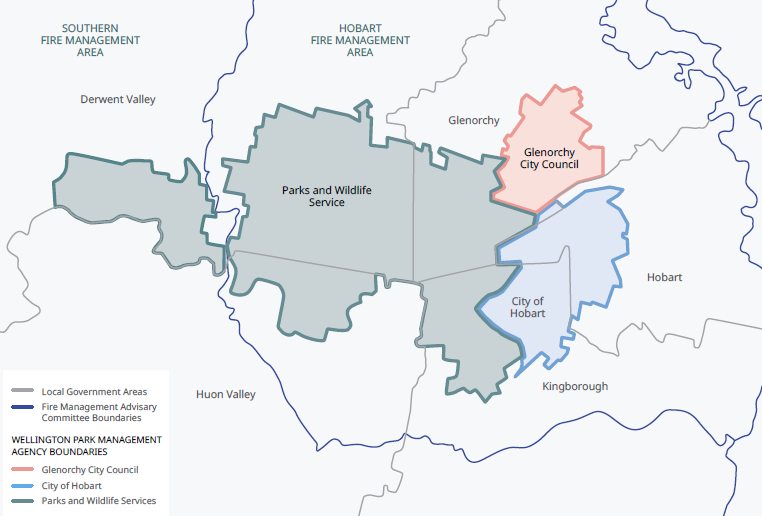
Despite a range of challenges, there are strengths in the current system. The Wellington Park Management Plan (2013) offers a single statutory reference for overall Park objectives and ensures that fire management is considered alongside other key values, including conservation, water supply, and recreation.
Fire management plans acknowledge both the history of major fires and the certainty of future bushfire in the Park. By recognising past events and key risks, the plans help protect the diverse objectives of agencies responsible for fire management in the Park.
Governance
Under the proposed governance model, the Managing Authority will become the single landowner and take on responsibility for operational fire management such as trail maintenance, and bushfire mitigation work that, historically, has been undertaken by the existing landowners. This will reduce the number of agencies involved and bring the various fire management plans into a simpler more coordinated process. To do this, in addition to employing rangers with the appropriate skills, the Managing Authority would have the powers to supplement those skills through contracting specialised services, or entering into service level agreements and other alternative arrangements. Service level agreements in particular would provide an effective mechanism for operational fire management. Fire management will need to be incorporated and prioritised into the Managing Authority’s budget and works programs. To do this, the Managing Authority will require a mechanism to raise funds for fire activities.
The Park will also continue to be incorporated into the statewide, tenure-blind Fuel Reduction Program which focuses on areas that pose greatest risk in Tasmania. It is estimated that the cost of planned burns within the Park average $232 per hectare, although there is significant variability in this estimation, ranging from $0.93 to $634.32 depending, for example, on the need for preparatory works, resourcing requirements or the time selected to conduct the burn. However, only a small portion of the Park is treatable using planned burning, and alternative more costly means of fuel reduction may be required.
There is an opportunity to strengthen fire management’s primacy by explicitly recognising fire management as a key function of the Managing Authority. Fire management could also be included as a formal objective of the Management Plan. Together with a requirement to consult with the TFS, this approach will prioritise fire management appropriately while retaining the Management Plan as the single statutory document for the Park. This will reduce confusion from stakeholders and clarify the roles and responsibilities of fire management in the Park.
This approach aligns with the Tasmania’s Wilderness World Heritage Area (TWWHA), where, under the NPRMA, the Director of National Parks and Wildlife can take any steps needed to prevent or manage fire, and the Management Plan clearly explains how that power should be used.
Strategic fire management planning
The TFS is currently developing Strategic Fire Management Plans that include Wellington Park and the broader Wellington Range. These plans aim to identify key bushfire risks and strategic trails, together with fire management zones which will help the Managing Authority to understand what they need to do by taking a landscape-scale strategic approach to fire management. Relevant agencies agree that the new overarching strategic plans should be adopted to replace the existing Wellington Park Fire Management Strategy 2006. The detail of what strategies and plans are required in the future will be a matter for the new Managing Authority, who would be expected to continue to work with the TFS to consider how strategies and plans can be applied to support fire management in the Park.
Engagement on other policy initiatives
Noting the importance of other policy work on fire management, and given the complex relationships between different legislation, relevant agencies and the new Managing Authority will consult each other on any proposed legislative changes to ensure objectives are upheld, and conflicts are minimised.
Various organisations and committees meet to discuss what fire management activities have been undertaken in their respective areas. They also collaborate on strategy and policy work, such as with the development of the new Strategic Fire Management Plans.
Consistent and up-to-date information
There is a lack of consistent and up-to-date information and mapping, partially due to the multitude of agencies, and partly due to a lack of resources. Incomplete or out-of-date data on fuel loads, fire trails, vegetation types, and other risk factors limits the ability to plan and operate effectively. Additionally, identifying gaps in, and mapping existing water access points is crucial for informed decision making, and will ensure that fire management agencies are well equipped with the necessary information in the event of a fire.
Early detection technology
New tools can help detect fires early and improve response times. For example, artificial intelligence assisted fire detection cameras can enable real-time smoke detection and alerts to emergency services. They are particularly valuable in remote areas with low visitation and limited human surveillance.
Case study: Tasmania's fire camera network
Sustainable Timber Tasmania (STT), the Tasmania Fire Service (TFS), the Parks and Wildlife Service (PWS), private forest managers and research institutions have collaborated in recent years to implement new technologies such as early detection cameras and satellite-based detection.
Currently, there are over 30 camera sites operating across Tasmania. The average cost of installation and maintenance varies by the type of camera (fixed or mobile) but is generally well under $100,000 per unit, making the network a cost-effective solution compared to traditional fire towers and aerial patrols.
Key benefits and outcomes
Agencies have noted that low awareness among adjoining landowners can hinder fire agencies’ ability to act quickly. Some landowners are reluctant to maintain strategic access or undertake activities to reduce fire risk. This hinders fire agencies’ ability to respond rapidly and effectively in the event of an emergency. Bushfire Ready Neighbourhoods aims to work together with communities to prepare for bushfires. The program runs information sessions and events as well as training and workshops to help build resilience and preparedness.
Engage with and educate the community
Extensive areas outside the Park, including private freehold land, Crown land, reserved land, and local government land, form corridors of continuous bushland that would prove difficult to contain in the event of a wildfire - particularly for adjacent suburban areas. Many dwellings in these areas are poorly prepared or highly vulnerable to bushfire, there are few places of last resort, and evacuation routes are particularly hazardous. Community education is essential to address this risk.
Targeted education campaigns and forums, like the Bushfire Ready Neighbourhoods program, can help landowners understand their role in fire management. While TFS have the statutory powers to enforce action, this must be supported by giving landowners knowledge about best practice to improve the likelihood of long-term risk mitigation.
Fire management is considered, consulted on and given primacy in the legislative reform of the Wellington Park Act 1993. Bushfire response and suppression responsibilities will be defined to ensure there is no loss in capability under new Managing Authority arrangements.
Time: Short Cost: HighStrategic Bushfire Management Plans will establish a strategic fire management approach to effectively manage bushfire risk. Fire risk management treatments within Wellington Park will be applied to achieve the strategic objectives outlined in the Strategic Bushfire Management Plans.
Time: Ongoing Cost: MediumBuilding Tasmania, the Tasmania Fire Service and the Managing Authority will be consulted on any legislative changes relating to fire management in Wellington Park.
Time: Short Cost: LowReview the current map of strategic fire management infrastructure within the Park to identify gaps and ensure key assets, such as fire trails, fuel breaks and water access points, are accessible and well maintained to support effective fire management. Ensure maps used to inform fire management within the Park are up to date.
Time: Medium Cost: HighInvestigate emerging technologies and how they may be implemented within the Park to support early fire detection and response.
Time: Short Cost: LowSupport continued Tasmania Fire Service community education programs to improve understanding of bushfire risk and awareness of fire management practices within the Park, including education for adjacent landowners about their responsibilities for fire risk reduction and management.
Time: Ongoing Cost: LowWellington Park is one of three key sources of drinking water for Greater Hobart, with the bulk of supply going to the Kingborough area. The catchments in the Park are especially valuable because they provide high-quality water that needs very little treatment, making it a cost-effective and reliable source. However, if inappropriately managed and protected, water quality can be at risk from:
Providing clean water is one of the functions for which the Park was set aside, but the water supply from Kunanyi / Mount Wellington also holds historical importance. The mountain has supported Hobart’s water needs for generations, and the popular Pipeline Track follows the original water system built in the 1860s. Parts of this system are protected under the Tasmanian Heritage Register due to their cultural and historical significance.
The Park’s proximity to Hobart and its popularity for recreation mean that managing water quality requires careful planning. While low-impact activities are allowed, consistent management is essential to protect the water supply.
The Park’s governance model is central to this protection. The Wellington Park Management Plan (2013) identifies specific Drinking Water Catchment Zones and Restricted Area overlays to safeguard these areas. It works in tandem with the Wellington Park Regulations 2019, which outline how water resources should be managed and protected. Management and maintenance responsibilities are divided. TasWater oversees the water infrastructure such as tanks and pipelines, while local councils handle maintenance of access trails to that infrastructure.
The Wellington Park Management Plan (2013) provides strong protection for water catchments through strategic zoning and a clear assessment process. The Trust works closely with TasWater to identify and manage areas that need to be restricted to protect water quality and manage the risk of contamination. Recently, a catchment in the Glenorchy Council area has had its protection zone removed, as it is no longer required, indicating how the mechanism can adapt to current needs.
Clarifying responsibilities
The Trust has a wide range of responsibilities but limited funding to support its work, including monitoring and enforcing regulations. Other organisations also play a role in protecting water catchments, and landowners are expected to manage their land in line with the Management Plan. One challenge is maintaining access tracks for water infrastructure. It is not always clear who is responsible for these tracks, and priorities for allocation of funding can differ between agencies which can affect monitoring and maintenance. TasWater reports that at time of consultation, there are several intakes and critical assets that are not accessible due to the degradation of shared use access tracks. There are parcels of land that are vested in different Local Government entities for the purpose of water supply. It is unclear what responsibility these entities have to manage land for this purpose. Clarifying these roles would support better coordination and care.
Improving access
Access roads are managed by local councils, but some are in poor condition due to limited resources and differing priorities for infrastructure maintenance. Better road maintenance would support infrastructure access and water quality protection.
Proactively managing pollution risks
Visitors to drinking water catchments in the Park can unintentionally affect water quality, especially through poor toileting practices. Raising community awareness and providing education on safe practices can help reduce risks. The rising popularity of sites like the Disappearing Tarn increases the risk of contamination but have limited oversight and regulation. Monitoring impacts and installing early warning systems for water quality issues would also support proactive, data-driven decision-making and help protect public health.
Install low-cost sensors to monitor indicators of catchment health in high-risk zones.
Time: Short Cost: LowImprove community understanding of drinking water catchment protection values and the historical importance of Wellington Park's water supply through a cohesive communications strategy.
Time: Short Cost: LowDevelop a strategy to install and maintain remote area toilets, for example at St Crispin's Well and Neika Schoolhouse areas, to reduce the risk of contamination from bush toileting within drinking water catchments.
Time: Medium Cost: Medium